3. Social Relations
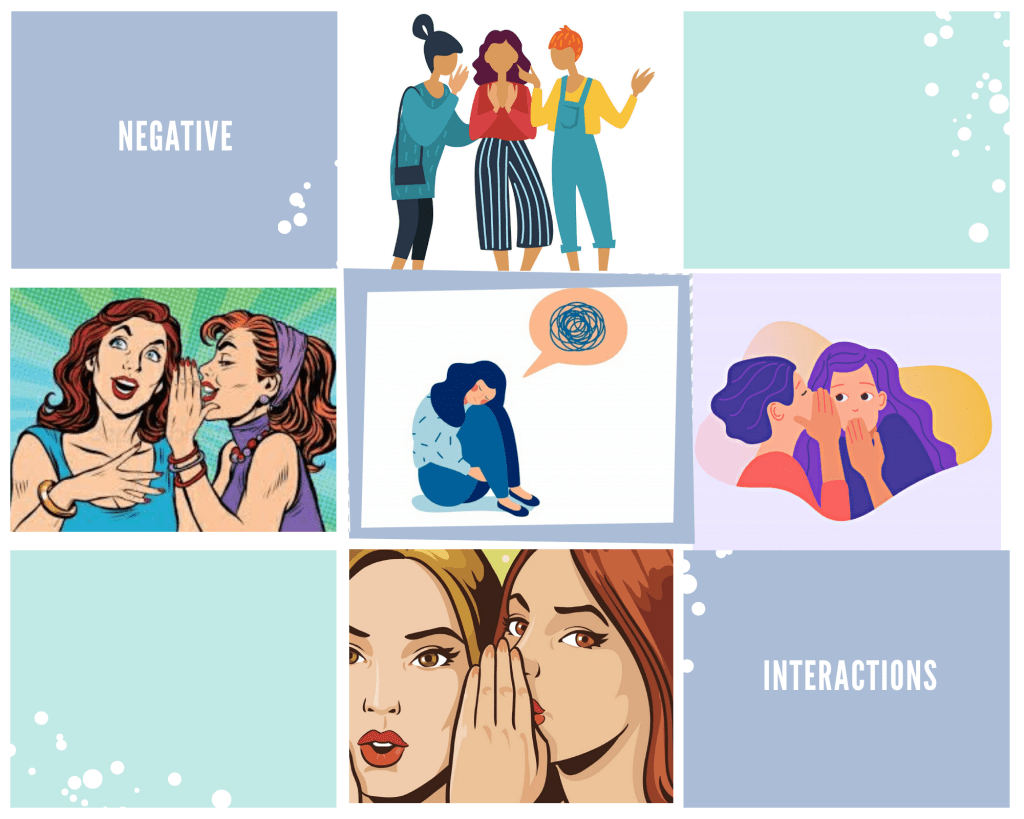
Social relations is a blanket term for interactions between two or more people, groups, or organizations. The additive or direct effects model suggests that positive and negative social interactions have additive effects on psychological well-being. This perspective argues that positive interactions have a beneficial impact on well-being, while negative interactions have a harmful impact. Due to our social interactions with other people, we develop biases and prejudices when dealing with someone we do not know or dislike. The single most influential factor in determining with whom you become friends and whom you form romantic relationships with, is the people you have most contact with; proximity plays a huge role in interactions. We may help someone in need or in distress because it triggers our sense of duty or responsibility. However relationships aren’t easy since feelings of jealousy or aggression may arise. Social aggression is gossip and also nonverbal communication, such as facial expressions or gestures that show contempt or disregard. A useful definition is “actions directed toward damaging others’ friendships, self-esteem, or social status” (Galen & Underwood, 1997).
Conclusion and Opinions
Big Ideas in Social Psychology (Social Thinking, Social Influences, and Social Relation) as we talk about it even more we now do understand it and there is a part of us that we can relate on some of the definition and some of them we apply it on our daily lives. In Social thinking, we think and react in different way, Intuition that we could think of so many maybe’s and what ifs as we think of the things in so many outcomes and our attitude affect our behavior. Social Influences, we learned so many things in the influences of other people, but on some part as we want to become one of some groups of friends and to become the favorite of other people we let them influence us until we become not true to ourselves, we changed to become a person that other people want but in some point we also tend to influence other people by the way we behave around them. Social Relations, some of our behavior are came from our ancestors that we inherited. To understand our social behavior we must consider both biological and social influences. So, we could know where we get this or that behavior. At some point as we do a social interactions with other people we develop a positive and negative behavior when dealing with someone we do not know or dislike a person.
The overall idea of social psychology is to seek and understand how we interact with other people, social psychology is a science that helps us understand how we perceive ourselves to the rest of the world and how this perception affects our behavior and how we view ourselves. The opinions of others also affects our behavior. Social psychology revolves into different types of Big ideas, and those Big Ideas shape the way we are as a person. Social thinking, Social Influences, and Social relations. These are the three domains that give us the ideas on how social psychology considered to be a science that help us understand how are we able to perceive ourselves. We construct our social reality, Social reality is a term use to describe how one or two or more minds work together to believe or construct certain thinking. Intuitions is our instinct, it is our ability to acquire knowledge without recourse to conscious reasoning. Attitudes shape and are shaped by behavior, an attitude is a psychological construct, a mental and emotional entity that inheres in and characterized a person, while behavior is the way how we act or conduct ourselves, attitudes can be shaped or is shaped by our behavior because we behave the way how we construct our emotions to a certain situations.
Sources:
https://www.alleydog.com/glossary/definition.php?term=Social+Relations#:~:text=Social%20relations%20is%20a%20blanket,exchange%20of%20feelings%20and%20ideas. Or just alleydog.com
https://www.ncbi.nlm.nih.gov/pmc/articles/PMC4651456/#:~:text=The%20additive%20or%20direct%20effects,interactions%20have%20a%20harmful%20impact. Or just ncbi.nlm.nih.gov
https://courses.lumenlearning.com/wmopen-psychology/chapter/prosocial-behavior/ or just courses.lumenlearning.com
https://www.kidpower.org/library/article/social-and-relational-aggression/ or http://www.kidpower.org
Qoura and Wikipedia.com
Authors:
- Ayumi Italia
- Devie Ocillada
- Elynfer Palcat
- Kim Apoyon
- Sophia Gonzalez
- Faye Yanson
 Some Big Ideas in Social Psychology